World IVF Day 2026: Celebrating Hope, Science & the Journey to Parenthood
What is World IVF Day?
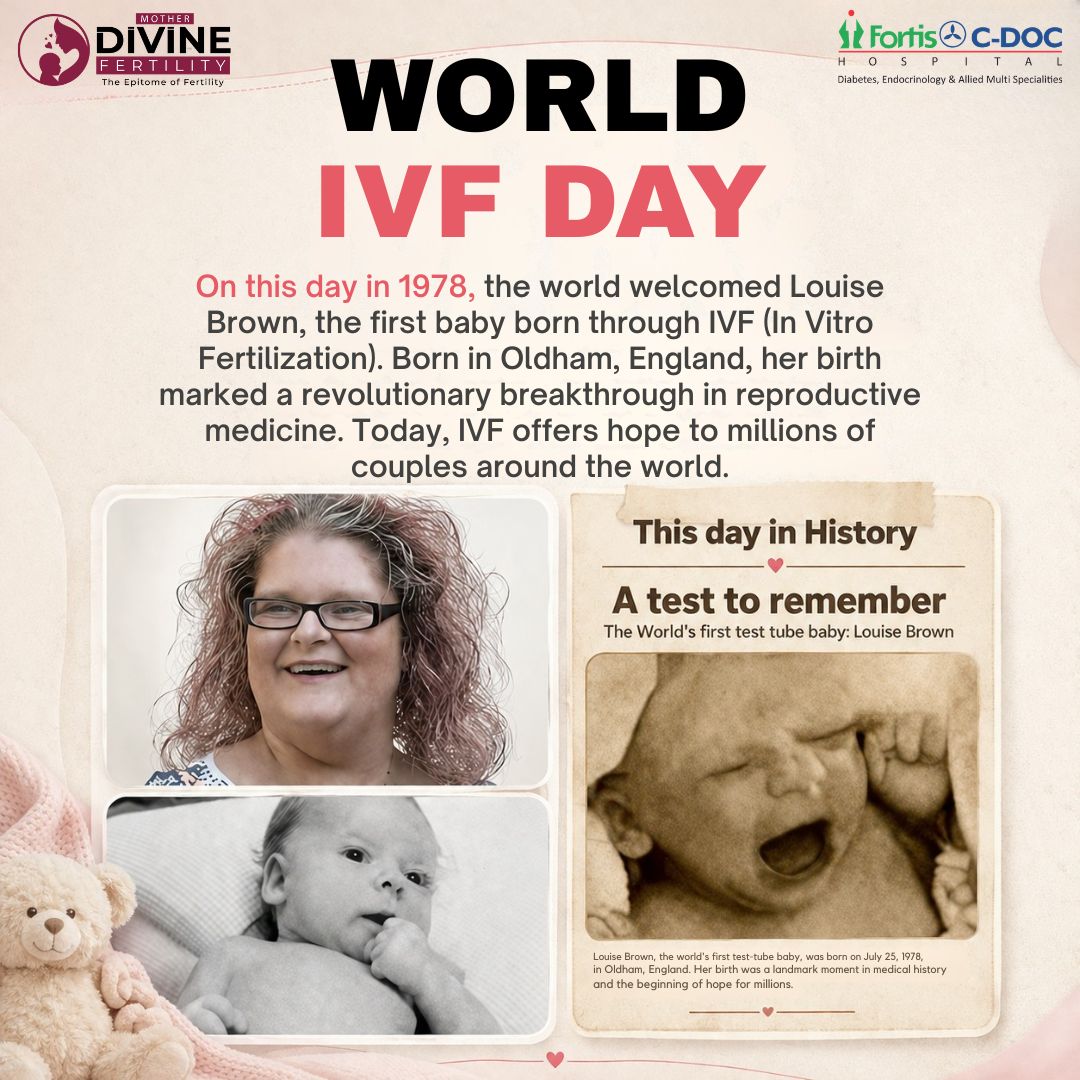
Every year on July 25, the world celebrates World IVF Day, also known as World Embryologist Day, to honour one of the greatest breakthroughs in modern medicine—the birth of the world's first IVF baby.
World IVF Day 2026 is more than just a date on the calendar. It is a celebration of hope, innovation, resilience, and the millions of families whose dreams of parenthood became reality through In Vitro Fertilization (IVF).
Today, infertility affects approximately 1 in 6 people globally, making fertility awareness more important than ever. World IVF Day serves as an opportunity to educate people about infertility, reduce stigma, and highlight the remarkable advancements in reproductive medicine.
Why is World IVF Day Celebrated?
World IVF Day commemorates the birth of Louise Brown, the world's first baby conceived through IVF.
On 25 July 1978, Louise Brown was born in England after a revolutionary fertility treatment developed by:
- Dr. Robert Edwards
- Dr. Patrick Steptoe
- Jean Purdy
Their groundbreaking work transformed reproductive medicine forever and gave millions of couples a new path to parenthood.
Today, more than 12 million babies worldwide have been born through IVF and other assisted reproductive technologies (ART), making IVF one of the most successful medical innovations in history.
The History of IVF
The journey of IVF has been one of determination, scientific excellence, and hope.
| Year | Milestone |
| 1960s | Early IVF research begins |
| 1969 | First successful human egg fertilization in laboratory |
| 1978 | Louise Brown becomes the world's first IVF baby |
| 1981 | First IVF baby born in the United States |
| 1986 | India welcomes one of its earliest scientifically documented IVF babies |
| 2000s | Blastocyst culture and embryo freezing improve outcomes |
| 2010 | Robert Edwards awarded the Nobel Prize in Physiology or Medicine |
| 2026 | AI-assisted embryo selection, advanced genetic testing, and personalized fertility treatments improve IVF success rates |
Why IVF Has Changed Millions of Lives
Infertility is a medical condition—not a personal failure.
Couples may struggle to conceive due to:
- Blocked fallopian tubes
- Low sperm count
- Ovulation disorders
- Endometriosis
- Polycystic Ovary Syndrome (PCOS)
- Advanced maternal age
- Unexplained infertility
- Genetic conditions
For many families, IVF offers renewed hope when natural conception or other fertility treatments have not been successful.
Beyond helping couples conceive, IVF has also enabled:
- Fertility preservation for cancer patients
- Egg freezing for future family planning
- Donor egg and donor sperm treatments
- Gestational surrogacy
- Preimplantation Genetic Testing (PGT) to reduce the risk of certain inherited conditions
Who Can Benefit from IVF?
IVF may be recommended for individuals or couples experiencing:
Female Fertility Issues
- Blocked or damaged fallopian tubes
- PCOS
- Endometriosis
- Premature ovarian insufficiency
- Age-related decline in egg quality
Male Fertility Issues
- Low sperm count
- Poor sperm motility
- Abnormal sperm morphology
- Obstructive azoospermia
Other Situations
- Unexplained infertility
- Recurrent miscarriages
- Same-sex couples
- Single parents by choice
- Couples with genetic disorders
Your fertility specialist will recommend a personalized treatment plan based on your medical history and diagnostic tests.
Understanding the IVF Process Step by Step
Many people think IVF is complicated, but understanding the process can make it less overwhelming.
Step 1: Initial Consultation
The fertility specialist reviews your medical history and recommends fertility tests.
These may include:
- Blood tests
- Hormone evaluation
- Ultrasound scan
- Semen analysis
Step 2: Ovarian Stimulation
Fertility medications stimulate the ovaries to produce multiple mature eggs instead of the single egg typically released during a natural cycle.
Regular ultrasound scans and blood tests help monitor follicle development.
Step 3: Egg Retrieval
Once the eggs are mature, they are collected using a minimally invasive procedure performed under sedation.
The process generally takes around 20–30 minutes.
Step 4: Fertilization
The collected eggs are combined with sperm in a specialized embryology laboratory.
In some cases, Intracytoplasmic Sperm Injection (ICSI) may be used, where a single sperm is injected directly into an egg to assist fertilization.
Step 5: Embryo Culture
The fertilized eggs develop into embryos over several days.
Embryologists monitor embryo quality carefully before selecting the healthiest embryo(s) for transfer.
Step 6: Embryo Transfer
One or more embryos are transferred into the uterus using a thin catheter.
The procedure is generally quick and does not usually require anaesthesia.
Step 7: Pregnancy Test
Approximately 10–14 days after the embryo transfer, a blood test is performed to determine whether implantation has occurred and pregnancy has been achieved.
IVF Success Rates in 2026
IVF success depends on several factors, including age, egg and sperm quality, embryo quality, and the underlying cause of infertility.
Modern advancements have significantly improved treatment outcomes.
Some of the latest innovations include:
- AI-assisted embryo selection
- Time-lapse embryo monitoring
- Preimplantation Genetic Testing (PGT)
- Improved embryo freezing (vitrification)
- Personalised ovarian stimulation protocols
- Advanced laboratory technologies
It's important to remember that IVF success is individual, and a fertility specialist can provide guidance based on your specific situation.
Common Myths About IVF
Myth: IVF always results in twins.
Fact: Single embryo transfer is commonly recommended to reduce the risk of multiple pregnancies.
Myth: IVF is only for women.
Fact: Male fertility factors contribute to many infertility cases, and IVF often addresses both partners' needs.
Myth: IVF guarantees pregnancy.
Fact: While IVF offers many people a chance to conceive, success depends on individual medical factors.
Myth: IVF babies are unhealthy.
Fact: Research shows that the vast majority of IVF-conceived children grow and develop just like naturally conceived children.
Tips to Improve IVF Success
- Maintain a healthy body weight.
- Eat a balanced, nutrient-rich diet.
- Avoid smoking and excessive alcohol consumption.
- Follow your fertility specialist's recommendations.
- Manage stress through relaxation techniques or counselling.
- Attend all scheduled appointments and medication reviews.
How World IVF Day is Celebrated Around the World
Each year, fertility centres, healthcare organisations, and patient communities mark World IVF Day through:
- Educational seminars and webinars
- Free fertility awareness camps
- Patient success stories
- Social media awareness campaigns
- Expert Q&A sessions
- Fertility screening initiatives
- Recognition of embryologists and fertility specialists
These activities aim to spread awareness, encourage early fertility evaluation, and support individuals and couples on their journey to parenthood.
Frequently Asked Questions (FAQs)
Q: Why is World IVF Day celebrated on July 25?
A: It commemorates the birth of Louise Brown, the world's first IVF baby, born on 25 July 1978.
Q: What does IVF stand for?
A: IVF stands for In Vitro Fertilization, a fertility treatment in which eggs are fertilized with sperm outside the body before being transferred to the uterus.
Q: Is IVF safe?
A: IVF is a well-established medical procedure that has helped millions of families worldwide. Like any medical treatment, it has potential risks, which should be discussed with a fertility specialist.
Q: Who should consider IVF?
A: IVF may be suitable for individuals or couples facing infertility due to female factors, male factors, unexplained infertility, genetic concerns, or other reproductive challenges.
Q: Can IVF be successful after age 35?
A: Yes. Success rates vary by age and individual health factors, but many people over 35 achieve successful pregnancies with IVF. A fertility specialist can advise on the most appropriate treatment options.
Conclusion
World IVF Day 2026 is a reminder of how science, compassion, and determination have transformed the lives of millions of families around the globe. It also serves as an opportunity to raise awareness about infertility, promote early diagnosis, and encourage open conversations about reproductive health.
Whether you are just beginning to explore fertility treatment or have been on this journey for some time, remember that support, information, and advanced medical care are available. Every path to parenthood is unique, and informed decisions can make a meaningful difference.
Take the First Step Towards Parenthood
If you've been trying to conceive without success or have concerns about your fertility, now is the right time to seek expert guidance. Early evaluation can help identify the underlying cause and open the door to the most suitable treatment options.
At Mother Divine Fertility, our experienced fertility specialists provide personalised, evidence-based care tailored to your unique journey. From comprehensive fertility assessments and advanced IVF treatments to ICSI, egg freezing, and compassionate counselling, we're committed to supporting you at every stage.
Whether you're just starting your fertility journey or exploring advanced treatment options, our dedicated team is here to help you make informed decisions with confidence and hope.
Book your free consultation with Mother Divine Fertility today and take the first step towards building the family you've always dreamed of.
📍 Visit: Mother Divine Fertility, B-16, Nehru Place Flyover, Opp. Devika Tower, Chirag Enclave, Greater Kailash, Delhi 110048.
📞 Call: +91-9311-988-500
Continue Reading
IVF Success Rate by Age – What You Need to Know
How to Improve Sperm Quality Before IVF
Preimplantation Genetic Testing (PGT) Cost in Delhi: Complete Guide (2026)
Low Sperm Count
Fresh vs Frozen Embryo Transfer: What is the Difference?
ओवेरियन सिस्ट क्या होती है: जानिए कारण, लक्षण, और उपचार
What Are the 5 Stages of IVF?

All Categories
Recent Posts

What Is AMH and Why Is It Important for Fertility?

Male vs Female Fertility: Understanding the Key Differences