
Infertility can feel stressful and emotionally exhausting. Many couples in India spend years trying naturally before exploring fertility treatment. If you are searching for answers about the IVF procedure or want to understand the IVF process step by step, this guide will help you clearly understand what happens during treatment.
Today, IVF has helped millions of couples become parents. With advanced technology and experienced specialists, many couples are now choosing IVF treatment in Delhi because it offers high-quality care at a more affordable cost compared to many other countries.
In this article, we will explain what are the 5 stages of IVF, how long the process takes, success rates, possible risks, and what you can realistically expect during your fertility journey.
What Are the 5 Stages of IVF?
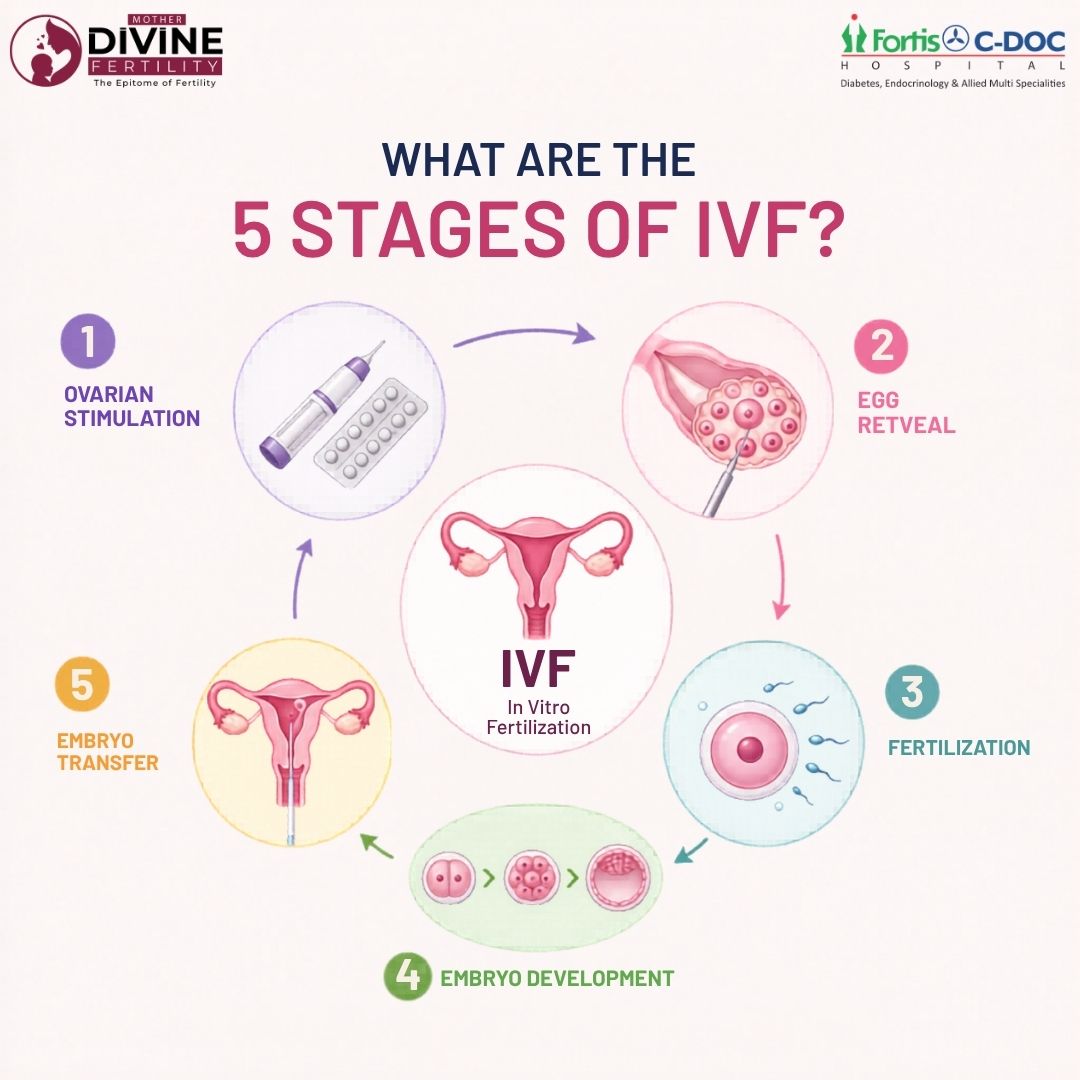
The IVF procedure is usually divided into 5 main stages:
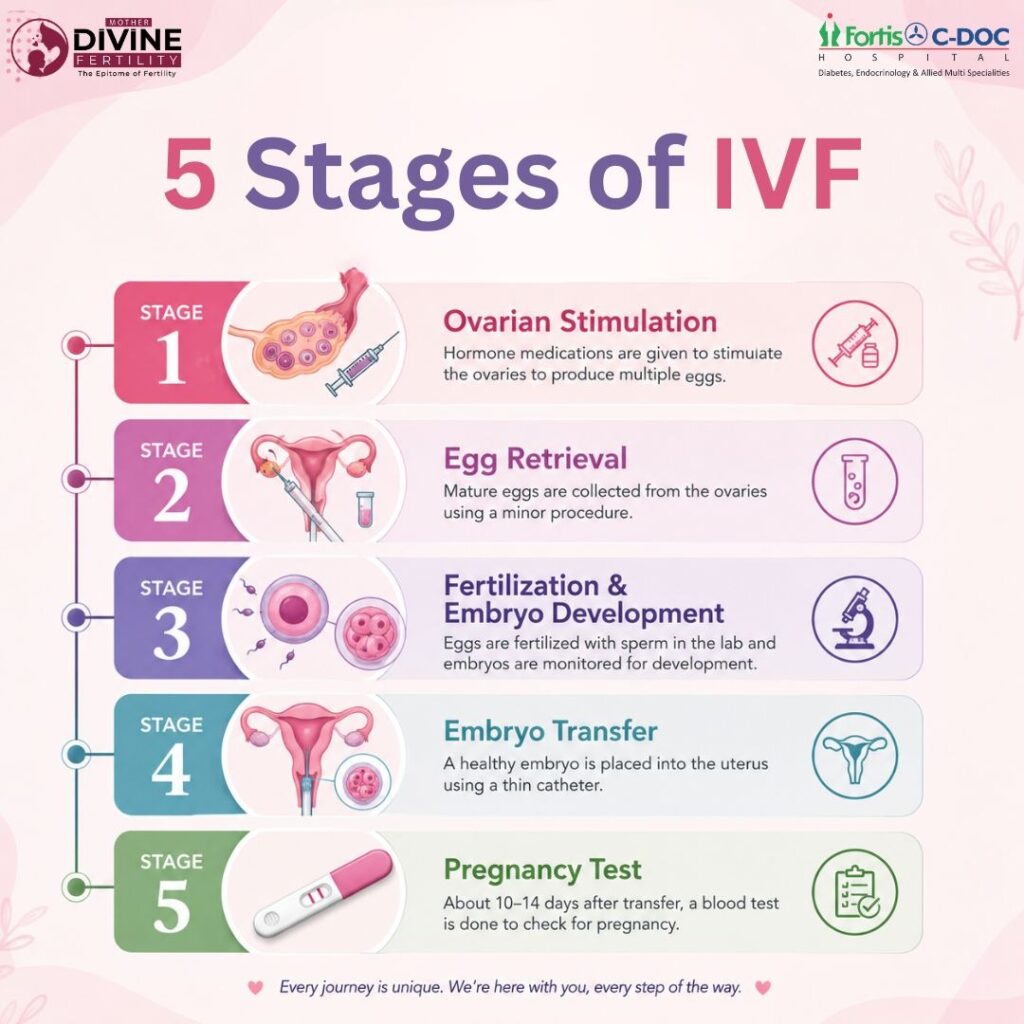
Each stage plays an important role in increasing the chances of pregnancy.
Introduction to IVF
IVF is a fertility treatment where eggs and sperm are combined in a laboratory to create embryos. The healthy embryo is then transferred into the woman’s uterus.
Doctors usually recommend IVF for:
- Blocked fallopian tubes
- Low sperm count
- PCOS-related infertility
- Endometriosis
- Unexplained infertility
- Advanced maternal age
- Failed IUI cycles
Many patients feel nervous before starting treatment. That is completely normal. One thing fertility specialists often tell couples is that understanding the process reduces fear. When you know what to expect, the journey feels easier and more manageable.
IVF Process Step by Step
Stage 1: Ovarian Stimulation
The first stage of the IVF procedure is ovarian stimulation.
Normally, a woman releases one egg every month. During IVF, fertility medicines are used to help the ovaries produce multiple mature eggs. More eggs can increase the chances of creating healthy embryos.
What happens during this stage?
- Hormone injections are given for 8–14 days
- Ultrasounds monitor follicle growth
- Blood tests check hormone levels
- The doctor adjusts medications if needed
Many women worry about injections. In reality, most injections are small and manageable. Fertility clinics also teach couples how to take them properly at home.
Common symptoms during stimulation
- Mild bloating
- Mood swings
- Breast tenderness
- Fatigue
Doctors closely monitor patients to avoid complications and ensure safe egg development.
Stage 2: Egg Retrieval
Once the eggs are mature, a trigger injection is given. Egg retrieval is usually scheduled 34–36 hours later.
This is a short procedure done under mild sedation.
During egg retrieval:
- A thin needle is used to collect eggs from the ovaries
- The procedure usually takes 20–30 minutes
- Most patients go home the same day
Many women fear pain during egg retrieval. In reality, most patients only experience mild cramping afterward, similar to period discomfort.
Recovery Tips
- Rest for the day
- Drink plenty of fluids
- Avoid heavy exercise
- Follow your doctor’s medication advice
This stage is emotionally important because the number and quality of eggs affect the next steps of IVF treatment.
Stage 3: Fertilization & Embryo Development
This is the laboratory stage of the IVF process step by step.
The collected eggs are combined with sperm in a controlled lab environment. Fertilization happens naturally or through ICSI, where a single sperm is injected into the egg.
What happens after fertilization?
- Fertilized eggs become embryos
- Embryos are monitored for 3–5 days
- Doctors identify healthy embryos for transfer
Not every egg becomes an embryo. This is completely normal and part of the IVF journey.
Why embryo quality matters
Healthy embryos have a better chance of implantation and pregnancy. Experienced embryologists carefully monitor embryo growth throughout this stage.
Many couples feel anxious while waiting for embryo updates. Fertility specialists understand this emotional phase and usually guide patients with honest expectations.
Stage 4: Embryo Transfer
Embryo transfer is one of the most hopeful moments during IVF treatment.
A healthy embryo is placed inside the uterus using a thin catheter. The procedure is simple and usually painless.
Key things to know
- No anesthesia is usually needed
- The procedure takes 10–15 minutes
- Patients can usually resume normal activities the next day
After embryo transfer
Doctors may prescribe:
- Progesterone support
- Mild lifestyle precautions
- Stress management advice
Many women ask if bed rest is necessary. Most fertility experts now recommend light normal activity instead of complete bed rest.
Stage 5: Pregnancy Test
The final stage of the ivf procedure is the pregnancy test.
About 10–14 days after embryo transfer, a blood test called beta hCG is done to confirm pregnancy.
This waiting period is often emotionally difficult for couples. Anxiety, excitement, and overthinking are very common.
During this time:
- Avoid frequent home pregnancy tests
- Follow medication instructions carefully
- Stay calm and positive
If the result is positive, the doctor schedules an ultrasound after a few weeks.
If the cycle is unsuccessful, doctors review the treatment and discuss the next plan. Many couples achieve success in later IVF attempts.
IVF Timeline Explained
Many couples ask how long IVF takes from start to finish.
Here is a simple IVF timeline:
| IVF Stage | Approximate Duration |
| Ovarian Stimulation | 8–14 days |
| Egg Retrieval | 1 day |
| Fertilization & Embryo Growth | 3–5 days |
| Embryo Transfer | 1 day |
| Pregnancy Test Wait | 10–14 days |
Overall, one IVF cycle usually takes about 4–6 weeks.
IVF Success Rate & Factors
IVF success rates depend on several factors.
Factors that affect IVF success
- Woman’s age
- Egg quality
- Sperm quality
- Embryo quality
- Uterine health
- Lifestyle habits
- Doctor’s expertise
General IVF success rates
| Age Group | Average Success Rate |
| Below 35 years | 50–60% |
| 35–40 years | 40–50% |
| Above 40 years | Lower success rates |
It is important to remember that every patient is different. Comparing your journey with someone else can create unnecessary stress.
Choosing the best IVF centre in Delhi with experienced fertility specialists and advanced labs can improve treatment outcomes significantly.
Risks and Side Effects of IVF
Like any medical treatment, IVF can have some risks and side effects.
Common side effects
- Mild cramping
- Bloating
- Mood changes
- Headache
- Fatigue
Rare complications
- Ovarian Hyperstimulation Syndrome (OHSS)
- Multiple pregnancy
- Infection after egg retrieval
Good fertility clinics monitor patients carefully to reduce risks.
One important thing patients should know is that most IVF side effects are temporary and manageable with proper medical care.
IVF Cost in Delhi
The cost of IVF treatment in Delhi depends on many factors such as medications, tests, and additional procedures.
| Average IVF Cost in Delhi | |
| Treatment | Approximate Cost |
| Basic IVF Cycle | ₹1,20,000 – ₹2,50,000 |
| IVF with ICSI | ₹1,50,000 – ₹3,00,000 |
| Frozen Embryo Transfer | Additional charges may apply |
Compared to countries like the USA or UK, IVF treatment in India is much more affordable while still maintaining advanced medical standards.
Many fertility clinics also offer EMI options or customized treatment plans to support couples financially.
Tips for a Successful IVF Journey
The IVF journey is not only physical but also emotional.
Here are some practical tips fertility specialists often share with patients:
Maintain a healthy lifestyle
- Eat balanced meals
- Stay hydrated
- Sleep properly
Reduce stress
- Practice meditation or yoga
- Avoid overthinking
- Stay emotionally connected with your partner
Follow medical instructions carefully
- Take medicines on time
- Never skip appointments
Avoid smoking and alcohol
These habits can affect fertility and embryo quality.
Choose the right fertility clinic
An experienced fertility team can make a huge difference in your comfort and confidence during treatment.
Why Couples Choose IVF Treatment in Delhi
Delhi has become one of the leading destinations for fertility treatment in India.
Reasons include:
- Experienced fertility specialists
- Modern IVF labs
- Affordable treatment
- Advanced technology
- Better accessibility for patients across India
Many couples searching for the best IVF centre in Delhi look for clinics that provide honest guidance, personalized care, and transparent pricing.
Conclusion
Understanding what are the 5 stages of IVF can make the fertility journey feel less overwhelming. The IVF process step by step includes ovarian stimulation, egg retrieval, fertilization, embryo transfer, and pregnancy testing.
Every couple’s experience is different. Some may conceive in the first cycle, while others may need additional support. The most important thing is to stay informed, patient, and hopeful.
With the right medical guidance and emotional support, IVF has helped countless couples achieve their dream of parenthood.
If you are planning to start your fertility journey or want expert advice about the IVF procedure, book your free consultation today or call +91 9311988500 to speak with a fertility expert.
FAQs About IVF Stages
Q: Is IVF painful?
A: Most IVF procedures involve mild discomfort rather than severe pain. Doctors use medications and sedation to keep patients comfortable.
Q: How long does one IVF cycle take?
A: One IVF cycle usually takes around 4–6 weeks from start to pregnancy test.
Q: What is the most important stage of IVF?
A: Every stage is important, but embryo quality and successful implantation play a major role in pregnancy success.
Q: Can IVF fail the first time?
A: Yes. Sometimes multiple IVF cycles may be needed. This is common and does not mean pregnancy is impossible.
Q: Is IVF treatment safe?
A: Yes, IVF is generally considered safe when performed under experienced fertility specialists.