
What is Ovarian Stimulation? A Complete Guide to IVF Ovarian Stimulation
Ovarian stimulation is one of the most important steps in fertility treatment, especially during In Vitro Fertilization (IVF). It is a medical process in which fertility medications are used to help the ovaries produce multiple mature eggs in a single menstrual cycle.
Normally, a woman releases only one egg every month. However, during IVF, having more eggs increases the chances of creating healthy embryos and achieving a successful pregnancy. This is why ovarian stimulation plays a crucial role in assisted reproductive technology (ART).
Over the past few decades, ovarian stimulation techniques have evolved significantly. Modern treatment protocols are now highly personalized, allowing fertility specialists to choose medications and dosages based on a woman's age, ovarian reserve, hormone levels, and previous treatment response. This individualized approach improves safety while maximizing the chances of success.
In this article, we will explore ovarian stimulation in detail, including how it works, why it is needed, medications used, benefits, risks, side effects, and what patients can expect during treatment.
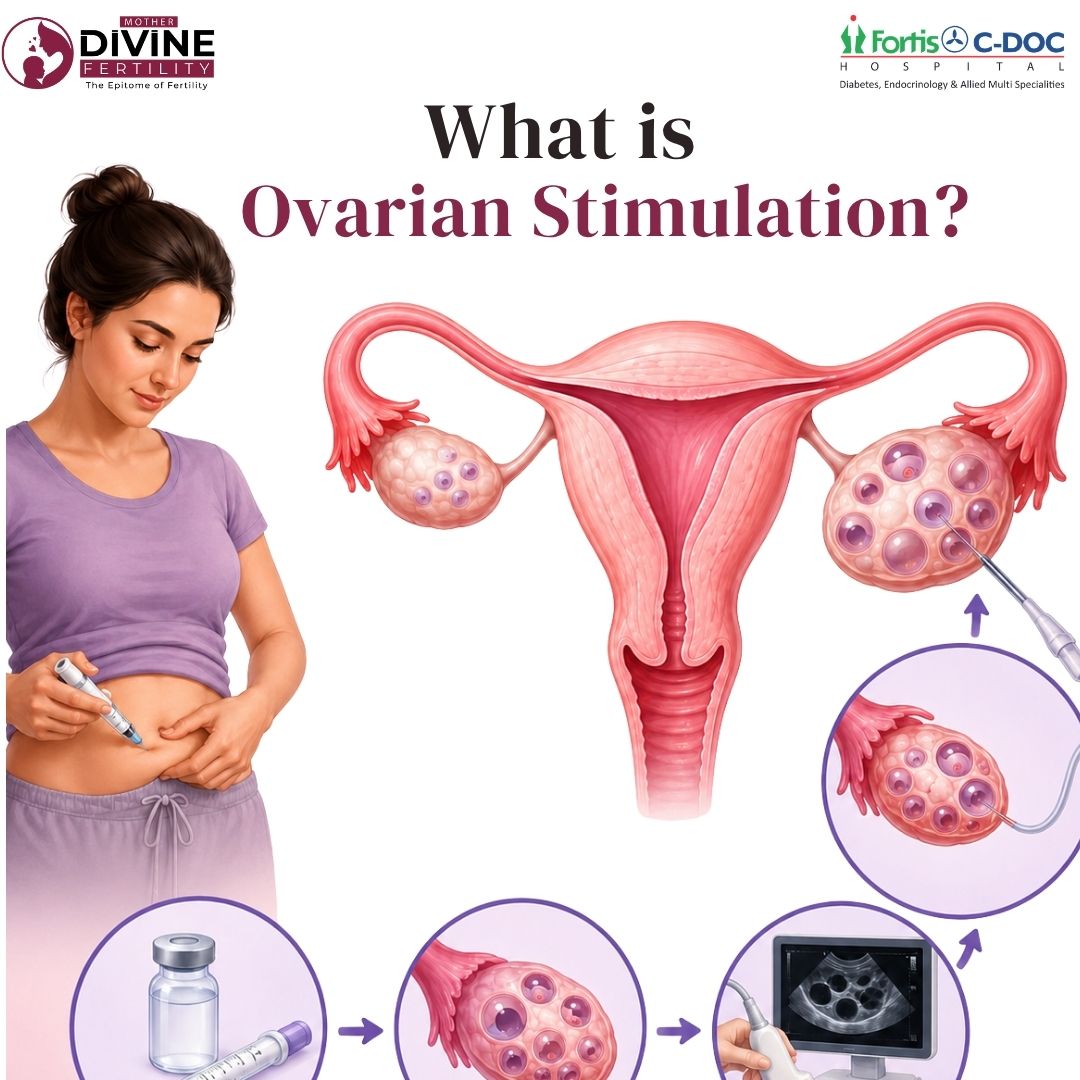
What is Ovarian Stimulation?
Ovarian stimulation is a fertility treatment that encourages the ovaries to develop multiple follicles simultaneously. Each follicle contains a potential egg.
The process involves taking hormone medications for several days under the supervision of a fertility specialist. Throughout the treatment, ultrasound scans and blood tests are performed to monitor follicle growth and hormone levels.
Once the follicles reach the desired size, a trigger injection is given to complete egg maturation. The eggs are then collected through an egg retrieval procedure.
In simple words:
Ovarian stimulation helps produce more eggs in one cycle to improve the chances of pregnancy through IVF or other fertility treatments.
A Brief History of Ovarian Stimulation
The early days of IVF relied on natural menstrual cycles, where only one egg could be collected each month. This limited pregnancy success rates.
Researchers later discovered that using fertility hormones could stimulate the ovaries to produce multiple eggs safely. Over time, controlled ovarian stimulation became the standard practice in IVF.
Today, doctors use advanced protocols and personalized medication plans that reduce complications while improving embryo quality and pregnancy outcomes.
Modern guidelines emphasize individualized treatment rather than a "one-size-fits-all" approach, helping optimize results for different types of patients.
Why is Ovarian Stimulation Needed?
The main goal is to obtain multiple mature eggs.
Not every egg fertilizes successfully. Even after fertilization, not every embryo develops normally or implants successfully.
Having multiple eggs gives embryologists more opportunities to select high-quality embryos.
Benefits include:
- More eggs available for fertilization
- Better embryo selection
- Higher IVF success rates
- Increased chance of frozen embryos for future pregnancy
- Reduced need for repeated IVF cycles
How Does Ovarian Stimulation Work?
The treatment follows a carefully monitored process.
Step 1: Initial Fertility Assessment
Before treatment begins, doctors evaluate:
- Age
- AMH (Anti-Müllerian Hormone)
- AFC (Antral Follicle Count)
- Hormone levels
- Medical history
- Previous IVF response
These factors help determine the most suitable stimulation protocol.
Step 2: Starting Hormone Injections
Daily hormone injections are prescribed for approximately 8–12 days.
These medications stimulate several follicles to grow instead of just one.
The dosage is individualized according to the patient's ovarian reserve and fertility profile.
Step 3: Regular Monitoring
Patients visit the fertility clinic every few days for monitoring.
Doctors perform:
- Ultrasound scans
- Blood hormone tests
The medication dose may be adjusted based on follicle growth and hormone levels.
Close monitoring is essential to ensure optimal egg development while minimizing risks.
Step 4: Trigger Injection
When follicles reach the appropriate size, a trigger injection is administered.
This injection completes the final maturation of the eggs.
Timing is extremely important because egg retrieval usually takes place around 34–36 hours later.
Step 5: Egg Retrieval
Egg retrieval is performed under mild sedation.
Using ultrasound guidance, the doctor collects mature eggs from the ovaries with a thin needle.
The procedure usually takes 15–30 minutes.
The retrieved eggs are then fertilized in the laboratory.
Medications Used During Ovarian Stimulation
Different medications may be used depending on the treatment protocol.
| Medication Type | Purpose |
| Follicle Stimulating Hormone (FSH) | Stimulates follicle growth |
| Luteinizing Hormone (LH) | Supports egg maturation in selected patients |
| GnRH Agonists or Antagonists | Prevent premature ovulation |
| Trigger Injection (hCG or GnRH agonist) | Final egg maturation before retrieval |
The choice of medication depends on the patient's age, hormone levels, ovarian reserve, and clinical condition.
Who May Need Ovarian Stimulation?
Ovarian stimulation is commonly recommended for women undergoing:
- IVF treatment
- ICSI treatment
- Egg freezing
- Fertility preservation before cancer treatment
- Some ovulation induction treatments
It may also benefit women with unexplained infertility or reduced ovarian reserve when clinically appropriate.
Advantages of Ovarian Stimulation
Ovarian stimulation has transformed fertility treatment by significantly improving IVF outcomes.
Key advantages include:
Increased egg numbers: More eggs provide more opportunities for fertilization.
Better embryo selection: Doctors can choose embryos with the highest developmental potential.
Higher pregnancy chances: Multiple embryos increase the possibility of successful implantation.
Embryo freezing opportunities: Extra embryos can be frozen for future use, reducing the need for another stimulation cycle.
Improved cumulative live birth rates: Patients may achieve pregnancy over multiple embryo transfers from a single stimulation cycle.
Are There Any Side Effects?
Most women tolerate ovarian stimulation well.
Some common side effects include:
- Mild bloating
- Abdominal fullness
- Breast tenderness
- Mood changes
- Fatigue
- Mild pelvic discomfort
- Injection site redness
These symptoms usually improve after egg retrieval.
Possible Risks of Ovarian Stimulation
Although generally safe, ovarian stimulation may carry some risks.
Ovarian Hyperstimulation Syndrome (OHSS)
OHSS occurs when the ovaries respond excessively to fertility medications.
Symptoms may include:
- Severe bloating
- Rapid weight gain
- Abdominal pain
- Nausea
- Shortness of breath in severe cases
Modern individualized protocols and careful monitoring have significantly reduced the incidence of severe OHSS.
Multiple Pregnancy
This risk depends mainly on the number of embryos transferred rather than ovarian stimulation itself.
Current IVF practices increasingly favor single embryo transfer to reduce this risk.
Poor or Excessive Response
Some women may produce very few eggs, while others may respond too strongly.
Personalized stimulation protocols help optimize response and improve outcomes.
Factors That Influence Ovarian Stimulation Response
Every woman responds differently.
Several factors affect treatment success:
- Age
- Ovarian reserve
- AMH level
- Body weight
- Hormonal profile
- Lifestyle habits
- Smoking
- Previous IVF cycles
- Underlying reproductive disorders
This is why individualized treatment planning has become the standard of care.
Tips During Ovarian Stimulation
Patients can support treatment by following healthy lifestyle habits.
Helpful tips:
- Take medications exactly as prescribed.
- Attend all monitoring appointments.
- Drink plenty of water.
- Eat a balanced diet.
- Avoid smoking and alcohol.
- Limit strenuous exercise.
- Report unusual symptoms immediately.
- Follow your fertility specialist's instructions carefully.
Ovarian Stimulation vs Natural Cycle IVF
| Ovarian Stimulation IVF | Natural Cycle IVF |
| Produces multiple eggs | Usually produces one egg |
| Higher embryo selection | Limited embryo options |
| Better cumulative pregnancy potential | Lower overall success rate |
| Allows embryo freezing | Rarely provides extra embryos |
| Requires fertility medications | Minimal or no stimulation drugs |
Frequently Asked Questions (FAQs)
Q: Is ovarian stimulation painful?
A: The injections are given with very small needles and are usually well tolerated. Some women experience mild discomfort or bloating during treatment.
Q: How long does ovarian stimulation last?
A: Most stimulation cycles last between 8 and 12 days, depending on the individual's response.
Q: Does ovarian stimulation affect future fertility?
A: Current scientific evidence indicates that controlled ovarian stimulation does not permanently reduce future fertility when performed appropriately under medical supervision.
Q: Is ovarian stimulation safe?
A: Yes. Modern ovarian stimulation protocols are considered safe when monitored by experienced fertility specialists using individualized treatment plans.
Conclusion
Ovarian stimulation is the foundation of modern IVF treatment. By encouraging the ovaries to produce multiple mature eggs, it increases the chances of obtaining healthy embryos and achieving pregnancy.
Advances in reproductive medicine have shifted ovarian stimulation from standardized treatment toward highly personalized care. Individualized medication protocols, careful monitoring, and improved clinical guidelines have made the process safer and more effective than ever before.
Although every patient's journey is unique, understanding ovarian stimulation can help reduce anxiety and prepare couples for one of the most important stages of fertility treatment.
With expert medical supervision and an individualized approach, ovarian stimulation continues to play a vital role in helping thousands of individuals and couples move closer to their dream of parenthood.

All Categories
Recent Posts
What Is AMH and Why Is It Important for Fertility?
Male vs Female Fertility: Understanding the Key Differences