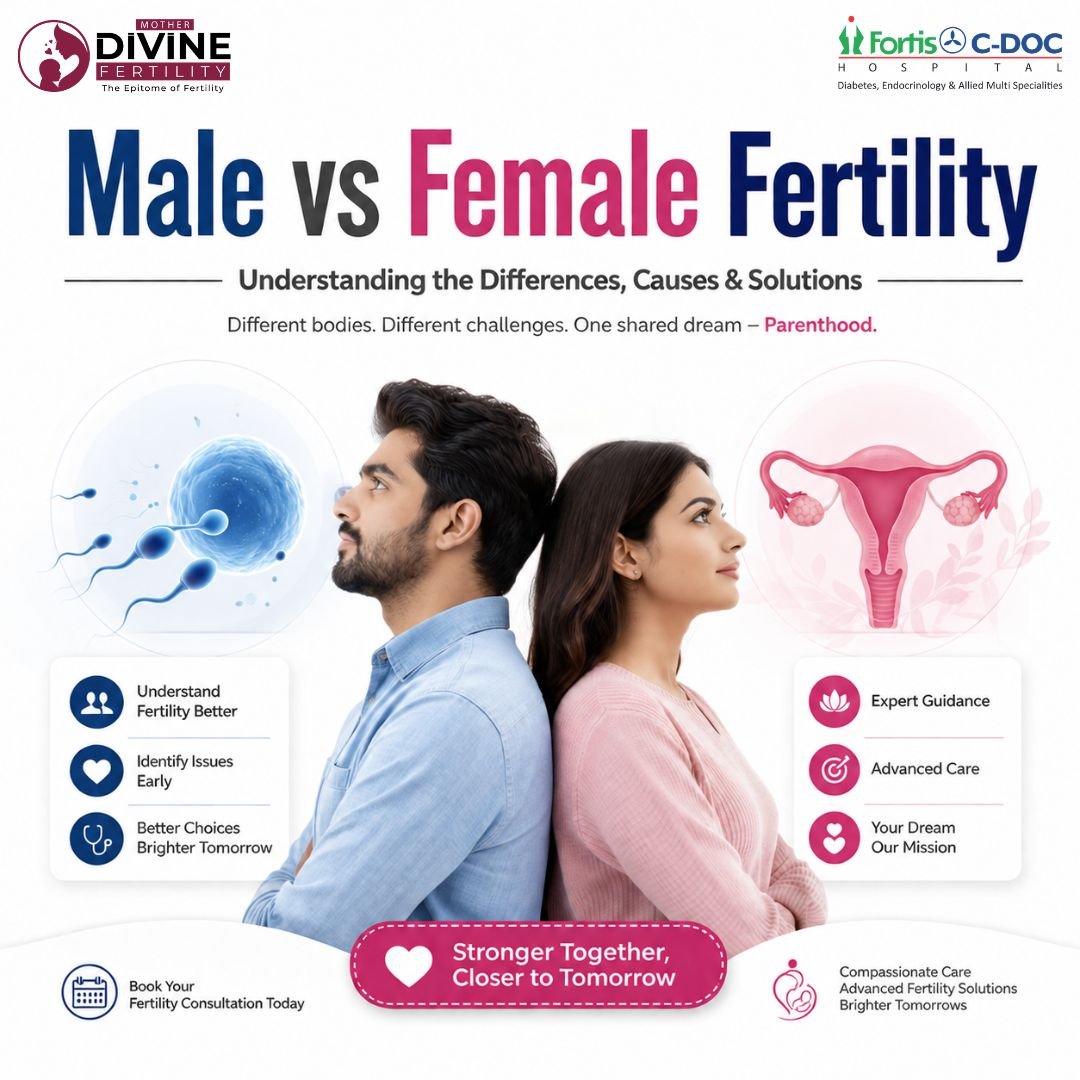
Planning to start a family is an exciting journey. However, many couples struggle to conceive naturally. One of the biggest misconceptions is that infertility is always caused by women. In reality, fertility depends on both partners. Understanding male vs female fertility can help couples identify potential issues early and seek the right treatment at the right time.
According to global studies, infertility affects around 1 in 6 couples during their reproductive years. Male factors contribute to nearly 40–50% of infertility cases, while female factors account for another 40–50%. In some cases, both partners have fertility-related issues.
This guide explains the differences between male and female fertility, common causes, warning signs, diagnosis, treatment options, and ways to improve reproductive health naturally.
What is Male vs Female Fertility?
Male vs female fertility refers to the different biological roles that men and women play in achieving pregnancy.
For pregnancy to occur naturally:
- The man must produce healthy sperm.
- The woman must release a healthy egg.
- Fertilization should occur successfully.
- The fertilized embryo must implant in the uterus.
A problem at any stage can reduce the chances of conception.
Male vs Female Fertility: Quick Comparison
| Factor | Male Fertility | Female Fertility |
| Main reproductive cells | Sperm | Eggs |
| Fertility declines | Gradually after 40 | Rapidly after 35 |
| New reproductive cells | Produced continuously | Born with a fixed number of eggs |
| Common problems | Low sperm count, poor motility | PCOS, endometriosis, blocked tubes |
| Main fertility test | Semen Analysis | AMH, Ultrasound, Hormone Tests |
| Lifestyle impact | High | High |
How Male Fertility Works
Male fertility mainly depends on the production of healthy sperm.
Healthy sperm should have:
- Good count
- Proper shape (morphology)
- Strong movement (motility)
- Healthy DNA
The sperm travels through the reproductive tract to fertilize the egg.
Even if ejaculation occurs normally, pregnancy may not happen if sperm quality is poor.
Common Causes of Male Infertility
Several factors can affect sperm production.
These include:
- Low sperm count
- Poor sperm motility
- Abnormal sperm shape
- Varicocele
- Hormonal imbalance
- Infections
- Genetic disorders
- Diabetes
- Obesity
- Smoking
- Alcohol
- Drug use
- Stress
- Excessive heat exposure
How Female Fertility Works
Female fertility is more complex because pregnancy depends on several steps occurring successfully every month.
A woman must:
- Produce a healthy egg
- Ovulate regularly
- Have open fallopian tubes
- Maintain healthy hormone levels
- Have a healthy uterus for embryo implantation
Unlike men, women are born with all the eggs they will ever have.
Both egg quantity and egg quality decline with age.
Common Causes of Female Infertility
Some common causes include:
- PCOS
- Endometriosis
- Blocked fallopian tubes
- Uterine fibroids
- Hormonal disorders
- Thyroid problems
- Low ovarian reserve
- Premature ovarian insufficiency
- Obesity
- Advanced maternal age
How Age Affects Male and Female Fertility
Age affects both men and women.
However, the impact is much greater in women.
Female Fertility:
- Women experience the highest fertility in their 20s.
- After age 30, fertility slowly declines.
- After 35, egg quality drops faster.
- After 40, natural pregnancy becomes more difficult.
Male Fertility:
Men continue producing sperm throughout life.
However, sperm quality gradually decreases after 40.
Older paternal age may increase the risk of:
- DNA damage
- Miscarriage
- Certain genetic conditions
Male vs Female Fertility Problems
Signs in Men
- Low sexual desire
- Erectile dysfunction
- Pain or swelling in the testicles
- Reduced facial hair
- Previous testicular surgery
- Abnormal semen analysis
Signs in Women
- Irregular periods
- Missed periods
- Painful periods
- Heavy bleeding
- Pelvic pain
- Recurrent miscarriages
- Difficulty conceiving after one year
Male vs Female Fertility Tests
Doctors usually recommend evaluating both partners together.
Male Fertility Tests
- Semen analysis
- Hormone testing
- Ultrasound
- Genetic testing
- DNA fragmentation test
Female Fertility Tests
- AMH test
- FSH test
- LH test
- Thyroid profile
- Pelvic ultrasound
- HSG test
- Ovulation monitoring
- Hysteroscopy (if needed)
Early testing can help identify the exact cause and improve treatment outcomes.
Can Fertility Be Improved Naturally?
Yes. Healthy lifestyle habits can improve fertility in many couples.
For Men
- Maintain a healthy weight.
- Exercise regularly.
- Quit smoking.
- Limit alcohol.
- Sleep 7–8 hours daily.
- Eat antioxidant-rich foods.
- Avoid excessive heat exposure.
- Reduce stress.
For Women
- Maintain a healthy BMI.
- Eat a balanced diet.
- Manage PCOS effectively.
- Improve egg quality with proper nutrition.
- Reduce stress.
- Get adequate sleep.
- Avoid smoking and alcohol.
- Track ovulation.
Natural methods may improve reproductive health but may not resolve underlying medical conditions.
Male vs Female Fertility – Treatment Options
Treatment depends on the underlying cause.
Common fertility treatments include:
1) Lifestyle Modification: Suitable for mild fertility issues.
2) Medication: Hormonal medicines may help improve ovulation or sperm production.
3) Surgery: Recommended for conditions like:
- Varicocele
- Fibroids
- Endometriosis
- Blocked reproductive pathways
4) IUI (Intrauterine Insemination): Useful for:
- Mild male infertility
- Ovulation disorders
- Unexplained infertility
5) IVF (In Vitro Fertilization): IVF is one of the most effective fertility treatments for couples with:
- Blocked fallopian tubes
- Severe male infertility
- Low ovarian reserve
- Endometriosis
- Unexplained infertility
- Repeated IUI failure
6) ICSI: It is often recommended when sperm count or sperm motility is significantly reduced.
Male vs Female Fertility – When Should You Visit a Fertility Specialist?
Consult a fertility specialist if:
- You are under 35 and have been trying for 12 months without success.
- You are over 35 and have been trying for 6 months.
- You have irregular periods.
- You have recurrent miscarriages.
- The male partner has abnormal semen reports.
- There is a history of PCOS, endometriosis, or varicocele.
Early diagnosis often leads to better treatment outcomes.
Male vs Female Fertility – Myths vs Facts

| Myth | Fact |
| Infertility is always a woman's problem. | Male factors contribute to nearly half of infertility cases. |
| Young couples cannot face infertility. | Fertility problems can occur at any age. |
| IVF is the only treatment. | Many couples conceive with medication or IUI. |
| Healthy-looking people are always fertile. | Fertility cannot be judged by appearance alone. |
| Stress alone causes infertility. | Stress may affect fertility, but it is rarely the only cause. |
Conclusion
Understanding male vs female fertility is the first step toward making informed decisions about your reproductive health. Fertility is a shared responsibility, and both partners should be evaluated if pregnancy is taking longer than expected.
Many fertility problems are treatable with timely diagnosis, lifestyle improvements, and advanced reproductive treatments. Seeking expert guidance early can improve your chances of achieving a healthy pregnancy.
Whether you're just starting your parenthood journey or have been trying for some time, don't hesitate to consult a fertility specialist for personalized advice and care.
Take the First Step Towards Parenthood with Mother Divine Fertility
If you are concerned about male vs female fertility, delayed conception, or recurrent pregnancy challenges, the experienced fertility specialists at Mother Divine Fertility are here to help.
We provide personalized fertility evaluations for both men and women using advanced diagnostic techniques and evidence-based treatment plans. From fertility testing and lifestyle guidance to IUI, IVF, and ICSI, our compassionate team supports you at every stage of your journey.
Book your consultation today and let us help you move one step closer to your dream of becoming parents.
Frequently Asked Questions
A: Yes. Male factors contribute to about 40–50% of infertility cases.
A: Both are fertile in different ways. Women experience a sharper age-related decline, while men produce sperm throughout life, though sperm quality also decreases with age.
A: Yes. Healthy eating, regular exercise, quitting smoking, reducing alcohol, and managing stress can improve fertility in both men and women.
A: A semen analysis for the male partner and an ovulation assessment with hormone tests for the female partner are commonly recommended as initial evaluations.
A: Many couples conceive naturally after addressing underlying issues, while others may benefit from treatments such as medication, IUI, IVF, or ICSI.
Continue Reading
IVF Success Rate by Age – What You Need to Know
5 Foods to Avoid for Better Male Fertility and Sperm Quality
How to Improve Sperm Quality Before IVF
Low Sperm Count
Egg Freezing in Your 30s: Is It the Right Choice?
Fresh vs Frozen Embryo Transfer: What is the Difference?