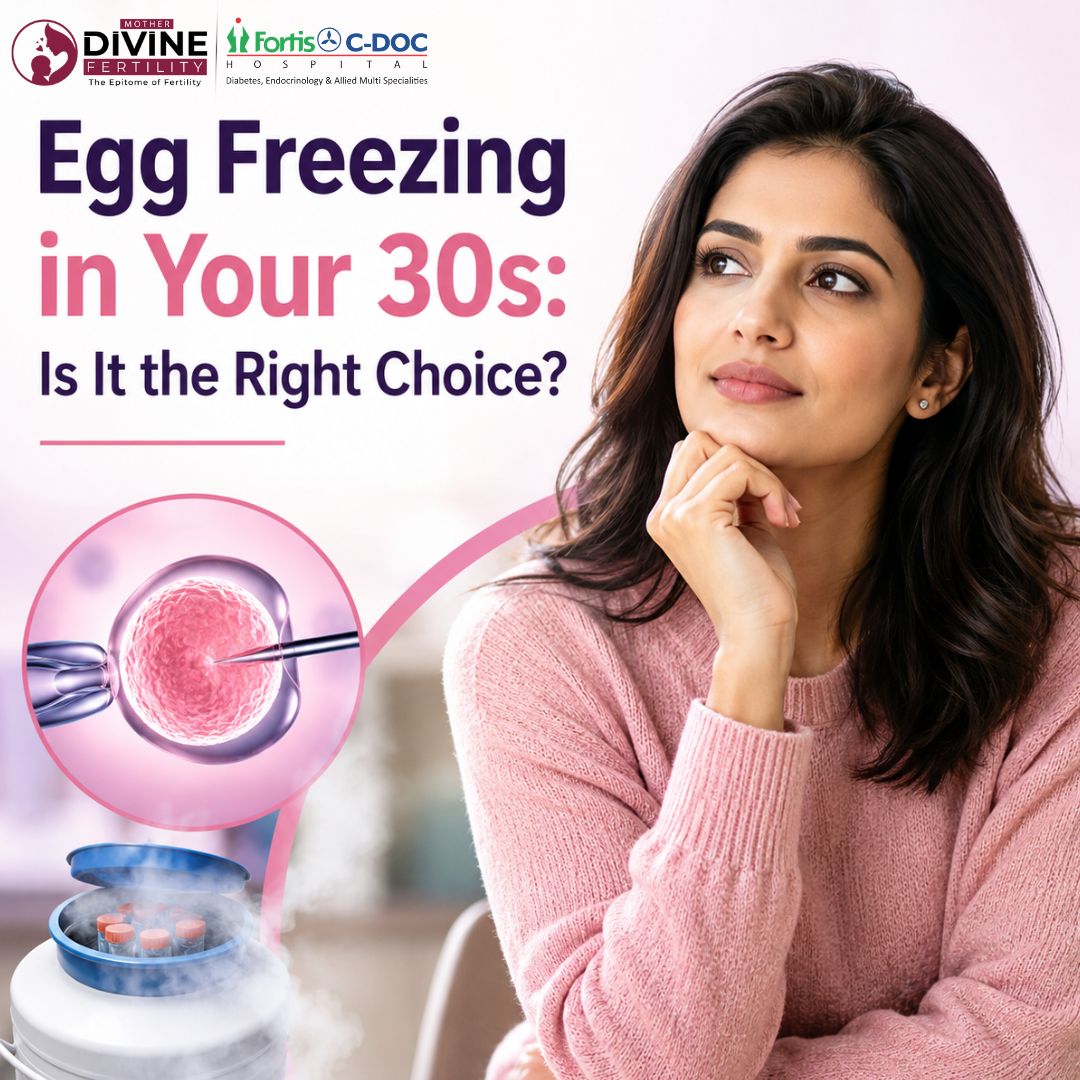
Many women today are choosing to start a family later than previous generations. Career growth, financial stability, higher education, finding the right partner, or managing health conditions are common reasons for delaying pregnancy. As a result, egg freezing in your 30s has become an increasingly popular fertility preservation option.
Many women in their 30s ask the same question: Is now the right time to preserve my fertility?
This guide explains how egg freezing works, who may benefit, what the procedure involves, expected success rates, possible risks, and what to consider before making a decision. Understanding your fertility today can help you make informed choices for tomorrow.
Do You Know What Egg Freezing Is?
Egg freezing, also known as oocyte cryopreservation, is a medical procedure that allows a woman to preserve her unfertilized eggs for future use.
During the process:
- Eggs are collected from the ovaries.
- They are frozen using an advanced technique called vitrification.
- The eggs remain safely stored until the woman decides to use them later through IVF.
The purpose of egg freezing is to preserve fertility, especially when pregnancy is being delayed for personal or medical reasons.
Why More Women Are Choosing Egg Freezing in Their 30s
The decision to delay motherhood is becoming more common across the world.
Common reasons include:
- Career advancement.
- Higher education.
- Financial planning.
- Waiting for the right partner.
- Medical treatment such as chemotherapy.
- Endometriosis.
- Family history of early menopause.
- Low ovarian reserve.
- Personal life goals.
Rather than feeling pressured by their biological clock, many women choose egg freezing to keep future family-building options open.
How Female Fertility Changes After Age 30?
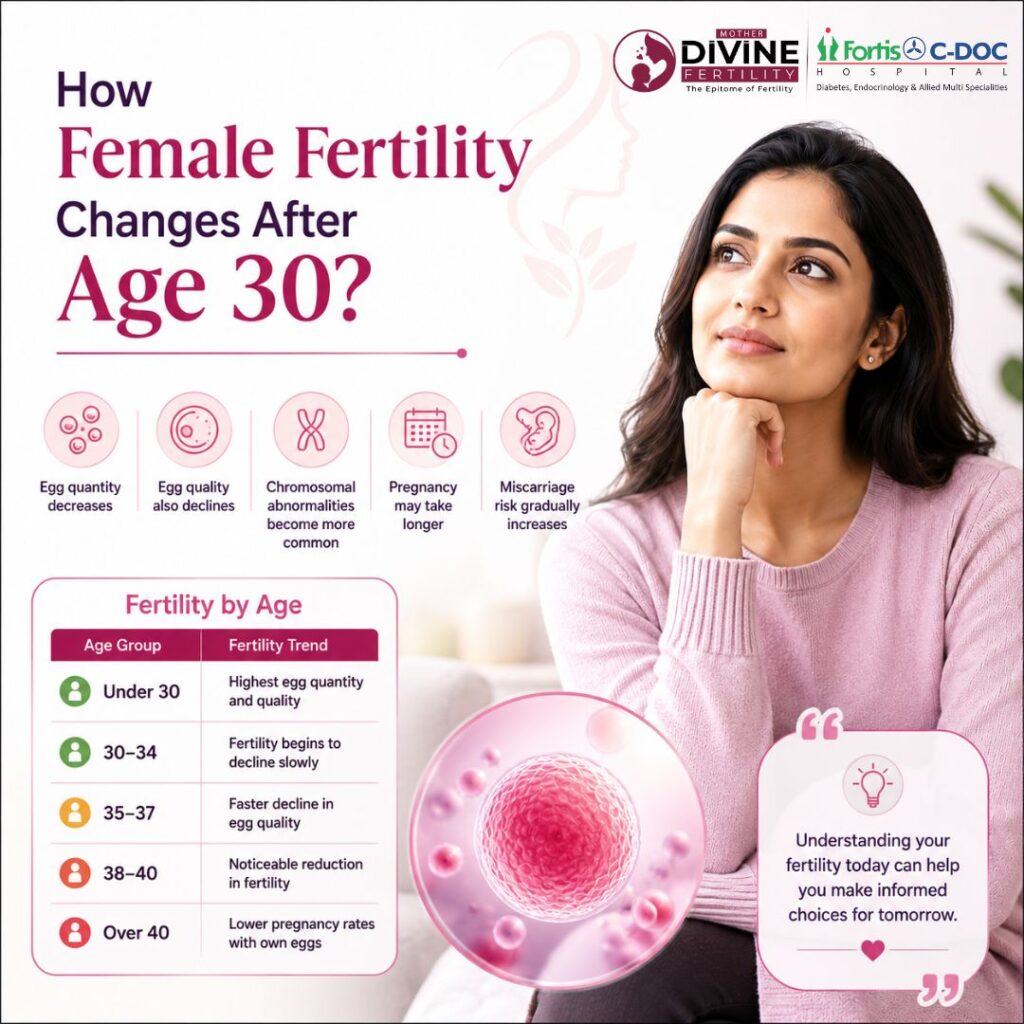
Women are born with a fixed number of eggs that gradually decreases over time.
Over time:
- Egg quantity decreases.
- Egg quality also declines.
- Chromosomal abnormalities become more common.
- Pregnancy may take longer.
- Miscarriage risk gradually increases.
Fertility by Age
| Age Group | Fertility Trend |
| Under 30 | Highest egg quantity and quality |
| 30–34 | Fertility begins to decline slowly |
| 35–37 | Faster decline in egg quality |
| 38–40 | Noticeable reduction in fertility |
| Over 40 | Lower pregnancy rates with own eggs |
This does not mean pregnancy becomes impossible after 35. Many women conceive naturally. However, preserving eggs earlier may provide additional reproductive options later.
Who Should Consider Egg Freezing?
Egg freezing may be suitable for women who:
- Want to delay pregnancy
- Are focusing on their careers
- Are pursuing higher education
- Have not yet found the right partner
- Have low ovarian reserve
- Have endometriosis
- Need chemotherapy or radiation treatment
- Have autoimmune diseases affecting fertility
- Have a family history of early menopause
- Are considering future IVF
Every woman is different. A fertility specialist can assess whether egg freezing is appropriate based on age, ovarian reserve, hormone levels, and reproductive goals.
When Is the Best Age to Freeze Your Eggs?
The ideal age for egg freezing is generally between 30 and 35 years, although younger women often have better egg quality. Women between 35 and 39 may still benefit depending on their ovarian reserve and overall fertility.
Comparison by Age
| Age | Expected Egg Quality | Recommendation |
| Below 30 | Excellent | Best biological outcomes but may not be necessary for everyone |
| 30–34 | Very Good | Excellent time for fertility preservation |
| 35–37 | Good | Still beneficial after fertility evaluation |
| 38–39 | Moderate | Individual assessment is important |
| 40+ | Lower | Egg freezing may be less effective; specialist advice is essential |
Egg Freezing Procedure Step by Step
Understanding the process can reduce anxiety and help you prepare.
1. Initial Consultation
The fertility specialist reviews:
- Medical history
- Menstrual cycle
- Lifestyle
- Family history
- Pregnancy plans
Your questions and expectations are also discussed.
2. Hormone Tests
Blood tests evaluate reproductive hormones, including:
- FSH
- LH
- Estradiol
- AMH (Anti-Müllerian Hormone)
These tests estimate ovarian reserve.
3. AMH Test
AMH is produced by ovarian follicles.
It helps doctors estimate:
- Remaining egg supply.
- Expected response to stimulation.
- Personalized treatment planning.
AMH does not predict natural pregnancy but is useful for planning fertility treatment.
4. Ultrasound Scan
A transvaginal ultrasound counts antral follicles.
This helps determine:
- Ovarian reserve.
- Medication dosage.
- Treatment strategy.
5. Ovarian Stimulation
Daily hormone injections are given for around 8–12 days.
These medications encourage multiple eggs to mature instead of the single egg released during a normal menstrual cycle.
Regular monitoring includes:
- Blood tests.
- Ultrasound scans.
6. Egg Retrieval
Once the eggs mature:
- A trigger injection is given.
- The egg retrieval procedure is typically scheduled 34–36 hours after the trigger injection.
- The procedure is usually performed under light sedation or anesthesia to keep you comfortable.
- It usually takes 20–30 minutes.
- Most women return home the same day.
7. Cryopreservation
Healthy mature eggs are frozen using vitrification.
This rapid freezing technique helps minimize ice crystal formation, improving the chances that eggs remain viable after thawing.
8. Storage
Frozen eggs are stored in specialized liquid nitrogen tanks at extremely low temperatures.
With appropriate storage, eggs can remain frozen for many years, subject to local regulations and clinic policies.
9. Future IVF Use
When pregnancy is planned:
- Eggs are thawed.
- Fertilized with sperm using IVF or ICSI.
- Embryos are cultured.
- A healthy embryo may be transferred into the uterus.
What Are The Benefits of Egg Freezing?
Potential benefits include:
- Preserves younger eggs.
- Supports future family planning.
- Provides reproductive flexibility.
- Helpful before cancer treatment.
- May reduce age-related decline in egg quality at the time of freezing.
- Can reduce emotional stress about delaying pregnancy.
However, egg freezing should be viewed as an opportunity to preserve fertility—not a guarantee of future pregnancy.
Risks and Limitations
Like any medical procedure, egg freezing has limitations.
Possible risks include:
- Mild bloating
- Temporary discomfort
- Injection-site soreness
- Ovarian Hyperstimulation Syndrome (OHSS) in rare cases
- Risks associated with sedation
- Not every frozen egg survives thawing
- Not every fertilized egg develops into a healthy embryo suitable for transfer.
Success depends on several factors, including:
- Age at freezing.
- Number of eggs collected.
- Egg quality.
- Sperm quality.
- Embryo quality.
- Overall reproductive health.
How Many Eggs Should Be Frozen?
There is no single number suitable for everyone.
Doctors consider:
- Age.
- AMH level.
- Ovarian reserve.
- Future pregnancy goals.
Generally, collecting more mature eggs may increase the chance of having usable eggs later. Some women may need more than one stimulation cycle to reach their desired number.
Egg Freezing vs Embryo Freezing
| Feature | Egg Freezing | Embryo Freezing |
| Fertilization before storage | No | Yes |
| Requires sperm | No | Yes |
| Suitable for single women | Yes | Usually No |
| Future flexibility | Higher | Lower |
| IVF required later | Yes | Embryo transfer later |
Preparing for Egg Freezing
Before starting treatment:
- Maintain a healthy weight.
- Eat a balanced diet.
- Exercise regularly.
- Avoid smoking.
- Limit alcohol.
- Sleep well.
- Manage stress.
- Follow your doctor’s medication instructions.
- Attend all monitoring appointments.
Healthy lifestyle habits support overall reproductive health, although they cannot stop the natural aging process of eggs.
Choosing the Right Fertility Centre in Delhi, India
When selecting a fertility clinic, consider:
- Experienced fertility specialists.
- Modern embryology laboratory.
- Transparent counselling.
- Personalized treatment plans.
- Advanced freezing technology.
- Clear pricing.
- Ethical medical practices.
- Good patient support.
- Comprehensive fertility evaluation.
A consultation should focus on your individual health rather than offering one-size-fits-all advice.
Frequently Asked Questions (FAQs)
Q: Is egg freezing safe?
A: Yes. Egg freezing is generally considered safe when performed by trained fertility specialists. Mild side effects like bloating or temporary discomfort are common, while serious complications are uncommon with proper monitoring.
Q: What is the best age to freeze eggs?
A: Many specialists recommend freezing eggs before age 35 when possible because egg quality is generally higher. However, women between 35 and 39 may still benefit after an individual fertility assessment.
Q: Can I freeze eggs after 35?
A: Yes. Many women successfully freeze eggs after 35. The number and quality of eggs may be lower than in younger women, so your fertility specialist will assess your ovarian reserve before recommending treatment.
Q: How long can frozen eggs be stored?
A: Frozen eggs can remain stored for many years when maintained under proper laboratory conditions. Storage duration may also depend on local regulations and clinic policies.
Q: How many eggs should I freeze?
A: The ideal number varies for each woman. Age, ovarian reserve, and future pregnancy plans influence the recommendation. Your fertility specialist will discuss realistic expectations based on your fertility evaluation.
Q: Is egg freezing painful?
A: Most women experience only mild discomfort. Hormone injections may cause temporary soreness, while egg retrieval is usually performed under sedation, making the procedure comfortable for most patients.
Q: What tests are needed before egg freezing?
A: Common tests include AMH, hormone blood tests, ultrasound scanning, infection screening, and a complete fertility evaluation. These tests help doctors create a personalized treatment plan.
Q: How much does egg freezing cost in Delhi?
A: The cost varies between clinics depending on medications, investigations, laboratory facilities, storage fees, and treatment requirements. A consultation provides the most accurate estimate based on your individual plan.
Q: Can frozen eggs be used for IVF?
A: Yes. Frozen eggs are thawed, fertilized using IVF or ICSI, and the resulting embryos may be transferred into the uterus if they develop appropriately.
Q: Who should consider egg freezing?
A: Women delaying pregnancy, planning cancer treatment, diagnosed with endometriosis or low ovarian reserve, or those wishing to preserve fertility for future family planning may consider egg freezing after specialist advice.
Final Thoughts
Choosing egg freezing in your 30s is a personal decision that depends on your health, life goals, and future family plans. While it cannot guarantee pregnancy, it can provide greater reproductive flexibility by preserving eggs at a younger age.
The earlier you understand your fertility, the more options you may have. If you are considering delaying pregnancy, speaking with a fertility specialist can help you make an informed decision based on your individual circumstances.
Thinking About Preserving Your Fertility?
Thinking about preserving your fertility for the future?
The specialists at Mother Divine Fertility are here to guide you with personalized advice, evidence-based recommendations, and advanced egg freezing services tailored to your reproductive goals.
Book your FREE Consultation Today
📞 +91 9311988500
🌐 Website: https://motherdivinefertility.com
Disclaimer
This article is intended for educational and informational purposes only. It should not be considered medical advice, diagnosis, or treatment. Fertility care should always be personalized based on your age, medical history, ovarian reserve, and reproductive goals. If you have concerns about your fertility or are considering egg freezing, consult a qualified fertility specialist for an individualized evaluation and treatment plan.